

Why a Weekly Generator Test Doesn't Guarantee Your Backup Power Will Work
If your standby generator starts every week without fail, it's easy to assume everything is working exactly as it should.
After all, the engine starts, it runs for a short period and the logbook gets ticked.
But here's the reality – a routine weekly test only proves that the engine can start. It doesn't prove that your standby power system will perform when your building loses mains power.
At Central Power Services, we've attended sites where generators have passed every scheduled weekly test, only to fail when they were needed most. In almost every case, the problem wasn't the engine itself – it was another part of the emergency power system that had never been tested under real operating conditions.
What a routine generator test doesn't tell you
A no-load test is an important part of generator maintenance, but it only checks a small part of the system.
It doesn't confirm that the generator can accept full electrical load, that the Automatic Transfer Switch will operate correctly, or that the alternator, cooling system and control equipment can perform under the demands of a real power failure.
That's why regular Load Bank Testing and Mains Failure Testing are so important for organisations that rely on standby power.
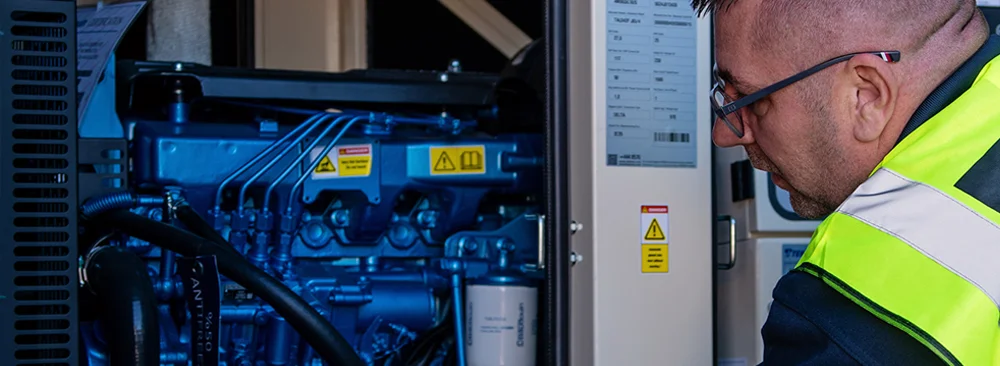
Load testing can expose blocked radiators, sticking thermostats and worn drive belts.
Common faults that only appear under load
When we carry out combined Load Bank and Mains Failure Testing, we regularly identify issues that aren’t visible during a routine engine run.
Failing batteries
A battery may have enough power to start an unloaded engine but fail once the generator is required to produce power under full electrical load.
Cooling system problems
Running a generator without load often isn’t enough to bring the engine up to full operating temperature. Load testing can expose blocked radiators, sticking thermostats and worn drive belts before they result in overheating during a genuine power outage.
Fuel system issues and wet stacking
Light engine loading allows unburnt fuel to build up within the exhaust system, known as wet stacking. Applying the correct load helps clear these deposits while also identifying blocked fuel filters or restrictions that may affect performance.
Voltage regulation faults
Testing under load allows engineers to assess the performance of the alternator and Automatic Voltage Regulator, helping to identify unstable voltage that could damage sensitive equipment.
Automatic Transfer Switch failures
A healthy generator is only part of the solution. If the Automatic Transfer Switch fails to detect a mains failure or transfer the building’s electrical load correctly, the generator may never supply power when it’s needed.
Breaker and switchgear performance
A real power outage creates significant electrical demands. Load testing confirms that switchgear and protection devices can cope without nuisance tripping.
Control system faults
The control system is responsible for managing the entire emergency sequence. Testing confirms that alarms, sequencing and prioritisation of critical loads all operate as intended.
Don't just test the generator – test the whole system
The purpose of standby power is simple: to keep your business operating when the unexpected happens.
That means testing more than just the engine.
By combining routine servicing with planned Load Bank and Mains Failure Testing, you can identify hidden faults before they become costly failures, giving you confidence that your standby power system will perform exactly as expected when it matters most.
Whether you operate a healthcare facility, manufacturing plant, data centre, commercial building or public sector site, regular testing of the complete emergency power system is one of the most effective ways to reduce operational risk.
If you're unsure when your standby power system was last tested under real operating conditions, the team at Central Power Services can help you assess your current testing regime and ensure your backup power is ready when you need it most.
